The details are imagined, but the stories are real.
Latest Stories
Front Page
What Happens in Her House Before 6 A.M. Is Not What You’d Expect.
By Sarah Llewellyn — Portland, OR
Long before the espresso machines hiss awake, 29-year-old medical assistant Marina Ortiz has already packed lunches, checked homework, and guided three half-asleep children toward another school day.
Her morning starts in the dim hallway, ushering her children and their tiny backpacks toward the crowded sidewalks outside.
One child worries about a spelling test, another about who will sit with him at lunch. Marina counts heads, checks crossing signals, and keeps her own worries to herself.
By the time the bus door folds shut, she has mentally switched jobs. She walks straight to the clinic, where she’ll spend the next ten hours on her feet taking blood pressures, calming anxious patients, and answering questions from people who never wonder who handled their morning at home.
On her short break, she scrolls through messages from school and quickly fills out an online form for a field trip. Her own lunch is whatever fits in her bag and can be eaten in under ten minutes.
Evenings are another round: supervising homework, listening to small voices retell their days, and figuring out how to stretch next week’s paycheck on the same kitchen table where permission slips wait for signatures.
To most people on the sidewalk, she is just another commuter in scrubs. To three children who watch her wave as the bus pulls away, she is the quiet proof that someone is fighting for them before dawn and long after sunset.
School Hallways
Most Kids Pick a Table. He Looks for Something Else Entirely.
By Daniel Hart — Milwaukee, WI
In a noisy cafeteria, most students look for their usual table. Twelve-year-old Malik scans for the kid pretending to be fine with an empty bench.
Malik remembers what it felt like to be the new student — the way the room seemed to tilt when he walked in and didn’t know where to go. Now, when he carries his tray into the cafeteria, he makes a quiet detour before sitting down.
He notices the boy staring too long at his phone, the girl slowly peeling the label off her juice box, the student who hovers near one table and then another, never quite joining. Malik walks over and says the same simple line: “Hey, want to sit with us?”
Some kids say no. Many say yes with visible relief. His friends have learned to slide over on the bench when they see him coming back with someone new.
No teacher told him to do this. There are no awards for “most lunches shared.” But every time he watches a once-awkward classmate laugh at a joke in his group, he feels like he quietly fixed something important.
“I can’t change the whole school,” he said. “But I can change who has to sit by themselves today.”
Quiet Shift
There’s a Secret Tucked Behind the Cereal Boxes. Someone Wants You to Find It.
By Jonah Carver — Des Moines, IA
During long overnight shifts, Liam began tucking small messages — “You’re doing better than you think today” — behind cereal boxes. The store never asked him to. No one signs his name. That’s the point.
Most shoppers never see who fills the shelves they pass by. Liam moves quietly from pallet to pallet, cutting open boxes and lining up packages with the labels facing out. The work is routine, almost invisible.
One night, remembering how much a kind sentence once helped him, he wrote a short note on a scrap of paper and slid it behind a cereal box: “Whoever finds this, keep going. You’re needed more than you know.”
He forgot about it until a customer mentioned to a cashier that they had found “the nicest note” on a hard day. So he wrote another, and another. Now, during each shift, he leaves a handful of new notes in different aisles.
He doesn’t look around the corner to see who finds them. He just enjoys the small act of sending encouragement out into the world with no expectation of reply.
“It takes almost no time,” Liam said. “If someone reads it and feels a little stronger, then the night was worth more than just boxes moved.”
Trying Anyway
There’s a Quiet Sound in His Kitchen Every Night. It’s Not What You Think.
By Jason Meyer — Cincinnati, OH
When the teacher says “Who wants to read?” Ethan’s eyes drop to his desk. His heart pounds, his cheeks burn — and still, he keeps his book open and practices one more time at home.
Ethan is not the kind of student who raises his hand first. Letters dance when he looks at the page too long. By the time he reaches the end of a sentence, he has forgotten how it started.
He dreads the moment the teacher scans the room for volunteers. Sometimes she chooses him anyway. His voice shakes. He stumbles over words his classmates race past. A few kids shift in their seats. He hears one quiet sigh and feels it like a spotlight.
What no one sees is what happens later that night. Ethan’s reading book sits next to his plate at the kitchen table. After dinner, he and his dad go through the same paragraph again and again, clapping when he finally makes it through without stopping.
The next day, when the teacher asks for a reader, his hand still doesn’t shoot up. But he doesn’t hide his face either. If she calls his name, he takes a breath and starts, one word at a time.
There are no honor-roll certificates for “kept trying even when it felt awful.” But if quiet courage earned grades, Ethan’s report card would be full of A’s.
Classroom Front Lines
There’s Something She Does in the Classroom After Hours — and No One Knows About It.
By Emily Rhodes — Minneapolis, MN
From the first bell to the last parent email at night, fourth-grade teacher Rachel Kim holds together twenty-seven students, a stack of lesson plans, and a salary that barely covers her bills.
Rachel arrives long before the students. She straightens desks, rewrites the objective on the board, and makes sure there are enough sharpened pencils for the child who always forgets. Her coffee is still half-full when the hallway explodes with backpack zippers and voices calling her name.
By 9:15 a.m., she has taught reading to one group, redirected a student who came to school angry, and calmly separated two children arguing over a marker. She eats a granola bar during a three-minute transition because there will not be a real break later.
Recess is not a rest. It is conflict management on a blacktop. She scans the yard for the child who plays alone, steps in when a game turns rough, and answers a quick question from a parent who “just needs one minute” about homework.
After dismissal, she stacks chairs and sits back down. There are emails from parents worried about grades, messages from administrators about new forms, and a planning template she fills with ideas so tomorrow’s lesson will click for the student who is still behind.
At home, her own children climb into her lap with their homework while she grades spelling tests at the kitchen table. The paychecks stretch just far enough. “People think we color all day and go home at three,” she said. “I just want my students — and my own kids — to know someone is in their corner giving their best.”
Invisible Infrastructure
She Drives the Same Route Every Morning and Notices What No One Else Sees.
By Carlos Vela — Phoenix, AZ
She knows who needs extra time at the curb, who rushes out at the last second, and who has started bringing a lunch from home because money is tight. Most riders know her only as “driver.”
Denise starts her shift before the sun rises, checking mirrors and routes in a depot that is still half dark. By the first stop, she has already adjusted the seat and mirrors the exact way she likes them, knowing she will repeat the same route dozens of times this month.
She cannot solve her passengers’ problems, but she can give them a predictable ride. She waits a few extra seconds for the man who always limps down the steps. She gently reminds teenagers to keep the volume down so other riders can rest before work. She steers carefully through potholes so a woman holding a sleeping child doesn’t have to brace herself.
“People see a bus, not a person,” Denise said. “That’s fine. My job is to get them where they need to go safely and on time. That’s enough.”
In a city that often feels rushed and distracted, her steady route provides a small piece of order that many quietly depend on.
Family Responsibility
Most People Walk Past This House Without Realizing What’s Going On Inside.
By Brian Caldwell — Omaha, NE
Their nine-year-old son’s world runs on visual schedules and carefully planned transitions. Mark and Lindsey Turner have rebuilt their routines around giving him a fighting chance in a world that often feels too loud.
Noah finds comfort in predictability. Sudden noises, unexpected changes, and crowded rooms can overwhelm him in seconds. His parents have learned to notice the warning signs — the way he twists his hands, the shift in his breathing — and step in before everything spills over.
“We adjusted how we live,” Lindsey said. “We eat earlier because he does better then. We shop at quieter times. It’s not about giving up life; it’s about giving him a chance to manage it.”
Mark works construction during the day and studies therapy notes at night. Lindsey keeps a binder of recommendations from professionals and records what actually works at home. Together they make small changes: a different seat at the table, a new way to label drawers, a calmer route to school.
They aren’t trying to be inspirational. They are trying to be consistent. Their measure of success is a day with fewer meltdowns and more moments when Noah looks relaxed instead of braced for impact.
“We can’t control everything he will face,” Mark said. “But we can control whether he faces it alone.”
Office Nerve Center
Most People Walk Past the Front Desk. They Never See What’s Really Going On There.
By Hannah Lee — Atlanta, GA
Parents, teachers, delivery drivers, and lost students all end up at the front desk. The person answering the phone isn’t “just the secretary.” She’s the emergency brake and the glue.
By 8:05 a.m., the phones are already ringing. One parent is stuck in traffic. Another needs to change a pickup plan. A teacher calls to say she is running late. The bell has not yet rung, and the day’s schedule is already sliding.
Karen types quickly, updating attendance, emailing teachers, printing a form for a parent who suddenly remembers it is due “today, I think.” A student arrives at the desk in tears because he forgot his project. She walks him through what to say when he goes back to class.
People lean in and whisper private worries: a child’s new diagnosis, a family crisis at home. She remembers details without repeating them in the hallway. “I’ll pass this on quietly,” she says, and she means it.
During her supposed lunch break, she finishes two reports and a late sheet while eating at her keyboard. When the fire alarm malfunctions that afternoon, every confused person in the building calls her first.
Her name is rarely on the school newsletter. But if she stays home, everyone notices. The silence on the other end of the extension is the loudest sound in the building.
Curbside Crew
Something Heavy Moves Through This Block at 4 A.M. Most People Never Notice.
By Peter Ross — Brooklyn, NY
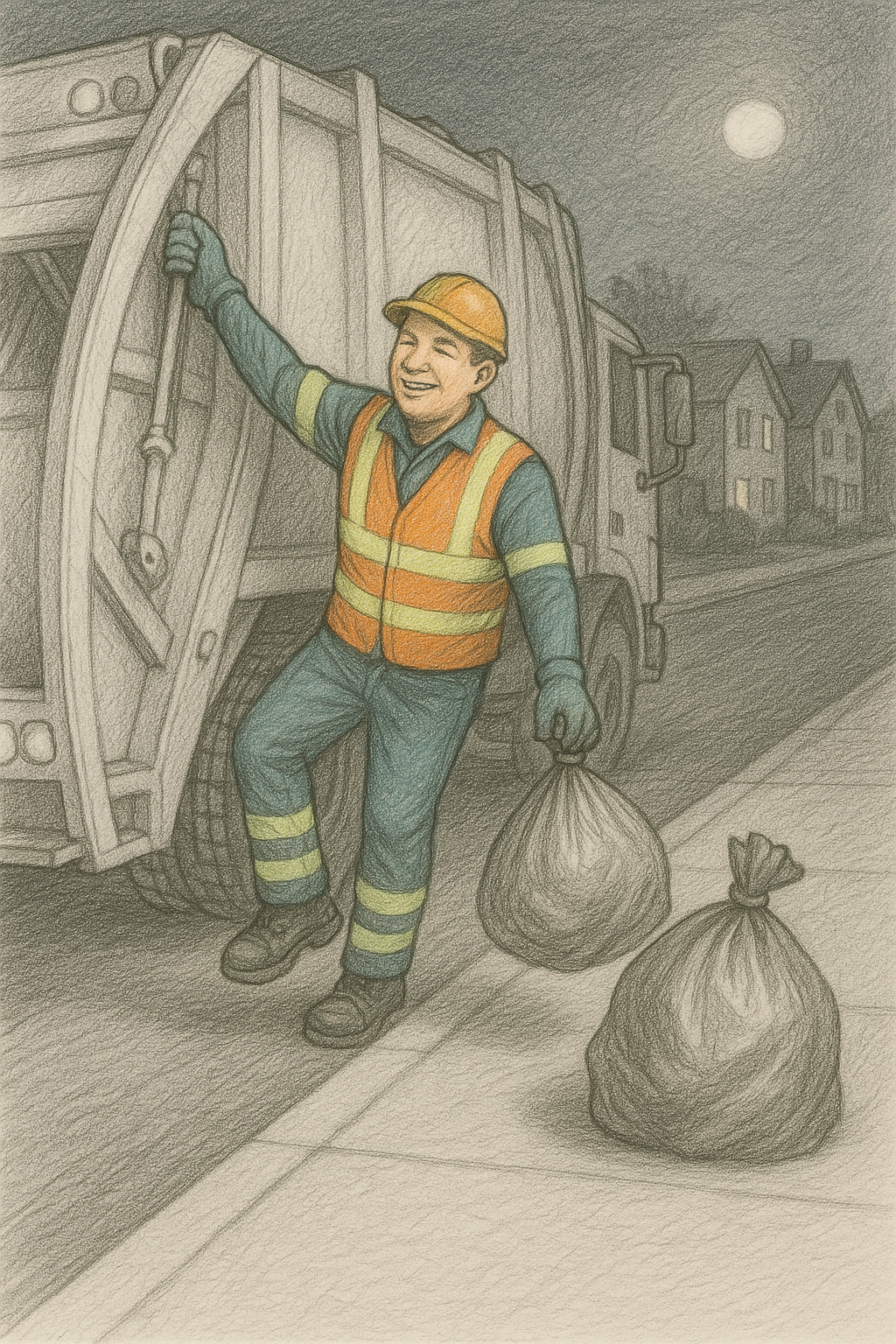
Before most alarms go off, Jorge hangs from the back of a garbage truck, hauling bags heavier than some gym workouts. Neighbors pull the covers over their heads and complain about the noise.
Jorge’s day begins in the dark. He pulls on reflective gear, laces his boots, and joins a small crew in the depot yard. The route is always the same but never identical. Some houses put out more trash after holidays. Some forget entirely.
He jogs from can to truck, lifting, tipping, and replacing at a pace that leaves his shirt soaked long before sunrise. The smell is a mix of everything the city throws away: leftovers, diapers, broken things no one could fix.
From bedroom windows, the truck is just a loud interruption. On the street, every stop is a small act of prevention, keeping rats, insects, and disease at bay.
“People get mad if we miss a pickup,” he said. “That’s okay. It means they notice when we’re gone, even if they never see us when we’re here.”
On his day off, he drives past neatly lined garbage cans and feels an odd pride. His job may not be glamorous, but it keeps the city breathable.
Click to Cart
What Happens to Your Order While You Sleep Would Shock Most Shoppers.
By Alan Brooks — Reno, NV
Online, deliveries feel instant. Inside the warehouse, Devon races a timer, a barcode scanner, and an aching back to make sure your box lands on the right truck.
Devon’s shift begins when most people are finishing dinner. A handheld scanner assigns him a list of items, and he starts walking. Down one aisle for cereal, across another for cleaning supplies, back again for batteries someone ordered at midnight.
The system tracks every move. If he falls behind, a red number flashes on the screen. He pushes himself to go faster, even when his knees complain and his feet feel like concrete.
He keeps a mental ledger as he works: this hour’s pay will cover the light bill, that overtime shift might finally chip away at the medical debt from his son’s surgery. The packages in his cart are strangers’ convenience. The ache in his shoulders is his family’s survival.
“People click a button and the box appears,” he said. “I just hope they use what’s inside for something good.”
When he finally clocks out, his fitness app reports more steps than some people take in a week. The screen calls it a goal. His body calls it another night of work most customers will never imagine.
On the Road
Most Riders Never Think About What Happens After They Close the Door.
By Sofia Martin — Miami, FL
When you tap “Request Ride,” a car icon appears on your screen. For Luis, it’s another hour pieced onto a day already stretched thin.
By mid-morning, Luis has already finished a shift unloading trucks at a warehouse. He eats a quick sandwich in his parked car, then turns on the rideshare app. The first ping comes before he finishes chewing.
He weaves through traffic, picking up strangers who slide into the backseat and immediately take out their phones. Some talk. Many don’t. A few treat him like a steering wheel with a name badge.
Between rides, he checks messages from his wife: a reminder about their daughter’s school project, a photo of their youngest finally learning to ride a bike. He wishes he could have been there.
He keeps the car clean, the music low, and the phone mounted where he can see the next turn. Tips help, but what matters most is keeping the rating high so the app keeps sending requests.
“People say, ‘It must be nice to drive around all day,’” he said. “They don’t see me typing in my hours at night, trying to make the numbers add up.”
When a passenger thanks him sincerely and wishes him a safe night, it lingers longer than any five-star tap on a screen. For a brief moment, he is not just part of the app. He is a person being seen.
Hidden Organizer
Most People Think the Community Just “Comes Together.” They Have No Idea Who’s Really Pulling the Strings.
By Lauren Weiss — Lakewood, NJ
When a family in the community hits a crisis, sign-up sheets appear, dinners arrive, and rides get arranged. Friends thank “everyone.” They rarely know about Esther’s phone.
Esther’s contacts list is a map of her neighborhood. She knows who can cook gluten-free meals, who has extra car seats, and who quietly slips gift cards into envelopes so no one has to see.
When she hears that someone has been hospitalized, she opens three apps at once: a calendar to schedule meals, a messaging platform to recruit volunteers, and a notes file where she tracks preferences and allergies.
Her own day is full: work, children, appointments that keep getting bumped. She answers messages between errands, during laundry cycles, and after her kids are asleep.
“People say, ‘It’s amazing how the community just comes together,’” she said. “It does. It also takes someone to nudge and remind.”
Her name is not on any public thank-you list. She prefers it that way. The gratitude she cares about is the moment a tired caregiver opens the door and smells a hot meal they didn’t have to plan.
After Hours
The Office Looks Brand-New Each Day. One Person Knows the Real Reason Why.
By Daniel Price — Cleveland, OH
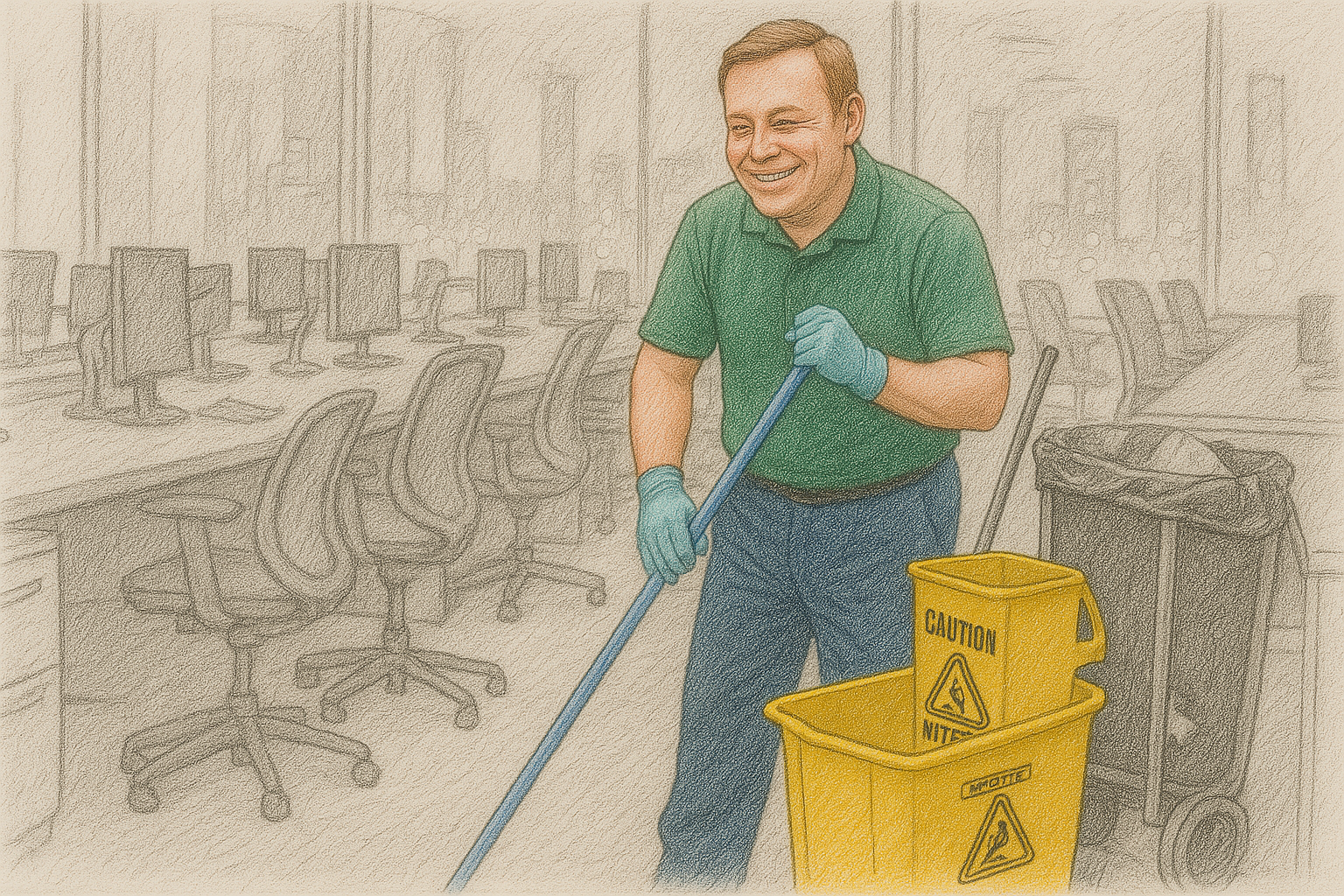
When employees step into spotless hallways each morning, they rarely think about the person who moved from floor to floor all night fixing what a busy day left behind. For seven years, that person has been Harold James.
Harold starts work when most of the building is going dark. He empties overfilled trash cans, wipes down break rooms, and quietly returns lost items he finds under desks. He knows which office always leaves lights on, which copier jams, and which window never quite locks.
“If I do my job right, nobody has to think about it,” he said. “They just walk into a place that’s ready for a new day.”
On winter nights, he shovels the side entrance before anyone arrives so the security guard doesn’t have to do it alone. When he sees a note left on a desk about a difficult project, he makes sure that desk is extra clear and organized. No one asked him; he just thinks it helps people start fresh.
Harold’s name isn’t on the company website. He doesn’t attend staff meetings. But the smooth, professional look that clients see every morning rests heavily on hours of work that happened while the rest of the building slept.
“People talk about big deals and important presentations,” he said. “I just try to remove one layer of difficulty from their day. That’s enough work for one night.”
Behind the Smiles
The Class Chat Sees Her Smile. Something Else Happens Off-Screen.
By Rachel Stone — Newark, NJ
To other parents, Mia is the organized one who always sends emojis and signs up for snacks. They don’t see the calculator open next to every “small fee” and “optional” outing.
Mia’s phone buzzes all day with group messages: money for the teacher’s gift, money for the class trip, money for the fundraiser that’s “totally optional.” Each time, she clicks into her banking app first.
On the outside, she replies quickly and cheerfully. “Count us in!” she types, then quietly rearranges her week: swapping brand-name groceries for store brands, moving a bill to the next paycheck, skipping the cup of coffee she had promised herself.
She is not extravagant. She tracks every purchase, packs lunches, and sells a few handmade items online at night. But the requests keep coming, each one small alone, together forming a steady pressure she can feel behind her ribs.
“I don’t want my children to feel like they are the only ones who can’t join,” she said. “So I smile and make it happen somehow. They shouldn’t carry the weight of my budget.”
At school events, she stands among other parents and claps for the children, her expression as bright as anyone’s. Only the notebook at home — filled with numbers and crossed-out plans — shows what it costs to look like everything is fine.
Slow Lane
She Looks Slow in Line — But She Just Ran a Marathon.
By Thomas Green — St. Louis, MO
At the grocery store, some shoppers sigh when they see the older woman with the cane. None of them see the list on her table, or the courage it took just to leave the house.
It takes Helen twenty minutes to put on her shoes. Her fingers don’t bend easily, and her knees protest every time she sits or stands. She rests twice between the bedroom and the front door.
Before she leaves, she studies her handwritten list again. She has circled the items that are on sale. Carrying even one extra bag will hurt her shoulders for days, so she chooses carefully.
In the checkout line, she moves slowly, placing each item on the belt with both hands. Behind her, someone scrolls on their phone, another person glances at the clock. She hears a soft sigh when she fumbles with her wallet.
“I was fast once,” she thinks, remembering the days when she pushed two small children in a cart and cooked for a table full of guests. Now, just getting here feels like a trip around the world.
When the cashier smiles and tells her to take her time, Helen’s shoulders drop an inch. She is still slower than everyone else. But for a few seconds, she is not a problem to be worked around. She is a person who did something hard today and made it to the other side of the door.
Quiet Care
She Doesn’t Know Who He Is — But He Never Leaves.
By Olivia Ward — Tampa, FL
When 82-year-old Joanne asks her son who he is, he answers the same way every time: “I’m Eric, your son. I’m here with you.”
Eric Lawson organizes his day around medication schedules, doctor’s appointments, and the unpredictable rhythm of dementia. Some mornings his mother greets him with a smile; other mornings she wonders why a “stranger” is in her kitchen.
He has learned not to quiz her memory. When she looks at him in confusion and asks, “Who are you again?” he answers gently, “I’m Eric, your son. I’m here with you,” as if it were the first time.
He prepares meals she used to cook for him, carefully labeling drawers and cupboards so she can still find things on better days. He answers the same questions again and again without raising his voice. When she becomes upset, he steps into the hallway, breathes, and walks back in with the same calm tone.
Friends tell him to take more breaks, and he does when he can. But leaving completely isn’t an option he considers. “She took care of me when I remembered nothing and contributed nothing,” Eric said. “It seems fair to return that patience now.”
Their conversations may not make sense to anyone else, but his quiet presence turns a confusing house into a place where an elderly woman is still looked after with dignity.
All-Night Watch
The Less He Writes Down, the Safer Everyone Is.
By Mark Daniels — Detroit, MI
The office building sleeps, but the lights in the lobby never fully go out. Tariq walks the same hallways, hour after hour, so nothing worse than boredom happens.
Most people only see the security guard in passing — a nod on the way out, a wave on a late night. They don’t picture him at 1:30 a.m. checking that the stairwell doors are locked, or at 3:00 a.m. reviewing camera feeds while fighting off a yawn.
Tariq learns the building’s rhythms. The elevator that sometimes sticks on the seventh floor. The exit sign that flickers when the air conditioner kicks in. The cleaning crew’s playlist that leaks faintly into the hall.
His nights are long stretches of nothing punctuated by brief spikes of concern: a motion alert in the parking lot, a delivery driver at the wrong door, a stranger who pulls too hard on a locked handle.
“If I go home and the logbook is boring, that’s a good night,” he said. “It means people come back in the morning and never have to think about what could have happened.”
On weekends, he drinks coffee with his kids and pretends not to be tired. He will sleep later. For now, he is the one standing between an empty building and the things that might decide to test its doors.
What Is “The Chopped Liver”?
Most outlets chase the loudest stories in the room. The Chopped Liver points the camera at the people the room barely notices — the ones doing steady, responsible work that rarely earns headlines.
Our pieces are fictionalized, but they are built from realities that happen every day. We’re not here for scandals or celebrities. We’re here for:
Parents quietly carrying more than one full-time load.
Caregivers showing up again and again, even when it’s not easy.
Workers and students whose names aren’t on the building but whose effort holds it together.
The tone is part heartfelt feature, part serious news parody — treating small, decent acts with the kind of attention usually reserved for big, dramatic stories.